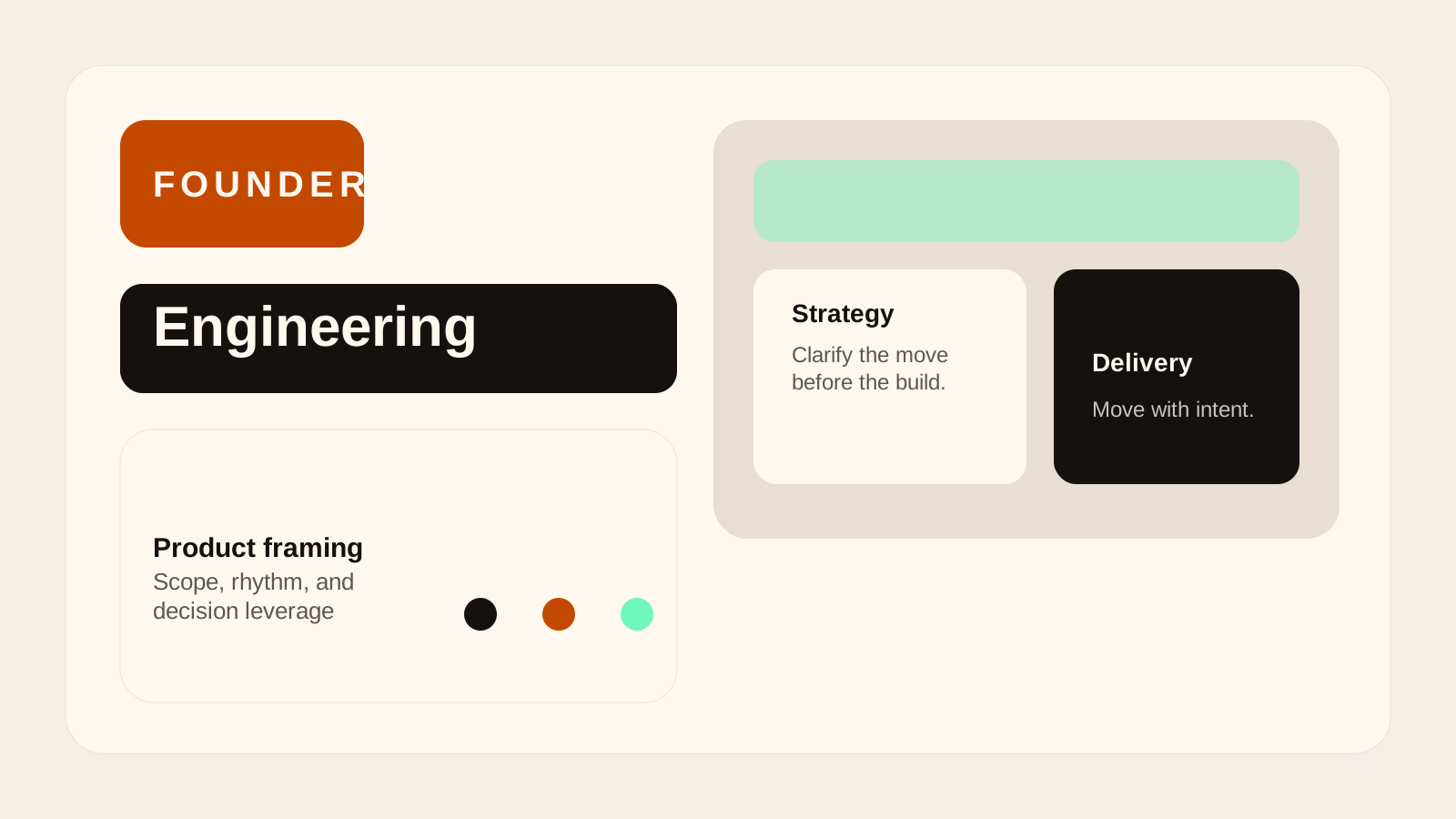
Startups often say they need someone "technical" when what they actually need is a builder who can think one level above implementation. That difference matters.
A founder-side engineer is not only there to ship features. The real value is in reducing confusion while the company is still deciding what kind of product it wants to become. Code is part of that work, but it is not the whole job.
Founder-side does not mean chaotic
There is a lazy version of founder-side engineering that just means "work at all hours and patch everything quickly." I do not think that is useful. It creates motion, but not necessarily leverage.
The stronger version looks different. It means:
- turning rough founder language into concrete product decisions
- identifying where speed matters and where patience matters
- protecting the team from scope drift disguised as urgency
- shipping in a way that teaches the business something useful
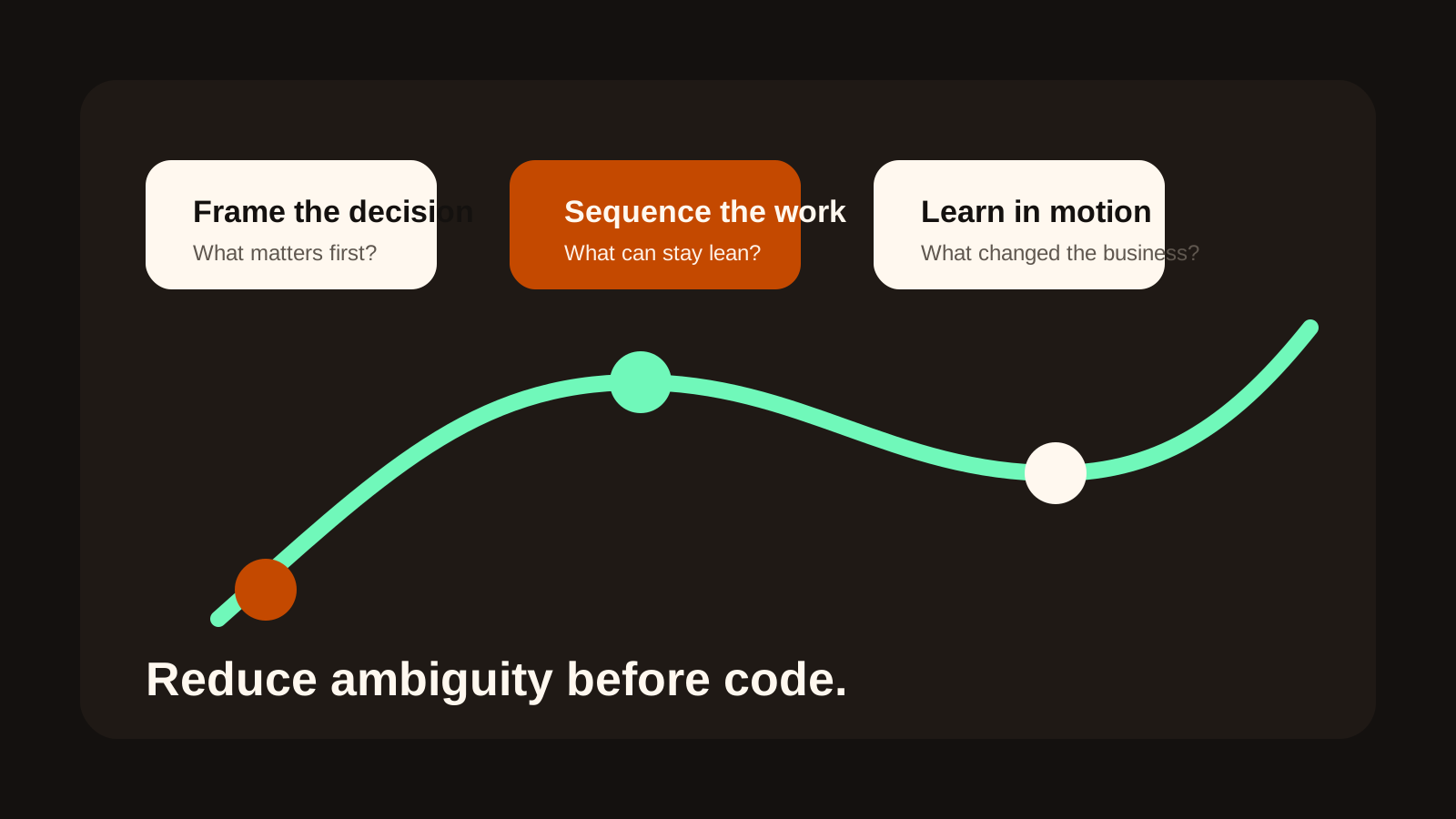
That is why I care about discovery and framing almost as much as I care about implementation. In early products, the most expensive mistakes usually happen before the codebase becomes the problem.
The job is to lower decision cost
Early teams burn time because every decision is expensive. Simple questions take too long:
- What exactly are we launching?
- Which workflow matters most in the first release?
- What can stay manual for now?
- Which feature is only reassuring the team, not helping the customer?
Founder-side engineering helps lower that decision cost. Sometimes that means shipping quickly. Other times it means cutting an entire branch of work, simplifying a flow, or proving a risky assumption with something deliberately small.
When this is done well, engineering becomes a force multiplier for product clarity. The team stops confusing volume with progress.
Product and technical judgment need to stay close
The reason I like this kind of work is simple: the best outcomes usually come when product judgment and technical judgment are not separated by too many layers.
If a founder wants to move into fintech, commerce, or operational AI, the challenge is rarely just "build feature X." It is more often:
- where trust has to be earned before conversion happens
- where the operating model will break once usage increases
- where internal workflows matter just as much as customer-facing polish
- where a team can accidentally overbuild before the market has answered anything
That is why founder-side work is not junior execution with a nicer label. It needs someone who can think about markets, delivery constraints, platform choices, and user behavior in the same conversation.
What I look for before I write code
Before I settle into implementation, I want four things to be clear:
- The business outcome we are trying to move.
- The user behavior that would prove the release is useful.
- The smallest system that can survive real usage.
- The part of the workflow that is most likely to create friction or mistrust.
Once those are clear, code becomes sharper. Architecture gets calmer. Tradeoffs become easier to defend.
Shipping is still part of it, just not the only part
None of this is an argument against execution. Founder-side engineering has to end in something real: a product, a release, a workflow, a system that works under pressure.
But the strongest founder-side builders do more than increase velocity. They help a company use velocity well.
That is the difference I care about. Not just how fast something gets built, but whether the build actually moves the business forward.